Showing posts with label Hachette Book Group. Show all posts

Sunday, July 6, 2014

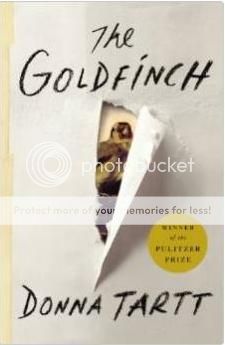
1148. The Goldfinch

The_Goldfinch photo The_Goldfinch.jpg


The Goldfinch, by Donna Tart is probably one of the best novels ever written. It is what is termed in the industry a Literary Novel like "A Tale of Two Cities" by Charles Dickens or "War and Peace" by Leo Tolstoy. Other literary novels abound, and many of them have won The Pulitzer Prize. In fact, for many a novelist, this is a dream or maybe call it a desire: to win the Pulitzer Prize in fiction. Just like an actor covets an Emmy or an Oscar.

There are other awards of course, as each sub-genre in fiction has its own award, Mystery has its "Edgar Award"; Science Fiction has its Hugo and Nebula; and so-on. There is also the Man - Booker Prize and some other fiction awards, but it seems that the Pulitzer has always had the highest luster, has always been the most coveted award.

Last spring, I remember watching a "60 Minutes" report on "The Goldfinch" centered around readers of the book who were visiting the Hague to look at the original painting. I thought to myself then, how could a book, so influence a person to do such a thing. Is this book really that good?

There are many reviews of this book, and mine will be one more in that torrent. Will it sway your opinion one way or the other? Will it make you absolutely hate the book? Will it make you absolutely love the book? There are those who believe that the book was not and will not be a long term commercial success, will not, in other words have staying power, despite the fact that it has already been optioned to become a movie (something I am already disturbed about). There are those, like this writer, who have a lot to say about this book. I am not going to comment on the Vanity Fair article, or try to copy or plagiarize any of the other reviews that are out there. Instead, I will give you this novice's review of "The Goldfinch" (mine).

It took me a long time to read this book, because it is a big book, almost 800 pages long. Oh, I've read big books before, but not like this. This book is best consumed in small bites, with a clear head. It's not a difficult book, the words in it are not complex and do not require a PhD in English Literature, but the content behind each sentence and the power of each word is such that the whole is greater than the individual word. Please don't misunderstand me. This, is not a pretentious book. This is, a really good book for everyone, except children of course. I do see a future where professors will be teaching this, just as "A Tale of Two Cities" has been taught, just as "War and Peace" has been taught.

The book is about 13-year old Theo Decker and his journey to adulthood. But this ─ this is the only plot point you need to know before you need to open it. Because Theo Decker can be anyone. Theo Decker could be me. Theo Decker could be you. Theo Decker could be your best friend from high school. And that journey will make sense to you, you will understand it. In that journey (or in parts of it) you will recognize yourself, you will recognize others you might have been around, you will recognize situations, and characterizations you would be familiar with. Theo, therefore is in archetype born from inside all of us. Is he a hero? Is he a villain? Is he redeemed at the end?

I can't tell you that! You must read the book to find out.

For me at least, this book worked. It worked, because it was a great coming of age story and because Donna Tart, somehow understood everything at the center of Theo Decker and was able to make everyone in his orbit work. Whether you believe she achieved this to make this a "Great Novel" that's for you to decide.

As to whether, I think this is a great novel, up there with the classics of literature... I have these last few thoughts: As I was going along, walking with Theo in Amsterdam, late in the Novel, questioning the trajectory of his life, I understood what Donna Tart was saying. I understood completely her message, the revelation that Theo had reached and the message she was trying to impart to her audience; us the readers. The problem is, I don't know how many people will get(got) that message. Not because it is in some code. Not because it's like "The Bible Code" and a higher power must impart it, or finally because it is hidden in the text somewhere. The problem for me arose when Theo Decker either in monologue or in dialogue with other main characters imparts that message to the readers near the end of the book:

─four hundred years before us, four hundred years after we're gone ─ it'll never strike anybody the same way at all but ─ a really great painting is fluid enough to to work its way into the mind and heart through all kinds of different angles, in ways that are unique and very particular. Yours, yours, I was painted for you.

(ed: Obviously, so can a great piece of literature.... hint, hint.)

And:

'Why be good.' But ─ this is what took hold on me last night , riding here in the car. What if ─ is more complicated than that? What if maybe opposite is true as well? Because, if bad can sometimes come from good actions ─ ? where does it ever say, anywhere, that only bad can come from bad actions? Maybe sometimes ─ the wrong way is the right way? You can take the wrong path and it still comes out where you want to be? Or, spin it another way? sometimes you can do everything wrong and it still turns out to be right?


Also:

 Only here's what I really, really want someone to explain to me. What if one happens to be possessed of a heart that can't be trusted ─ ? What if the heart, for its own unfathomable reasons, leads one willfully and in a cloud of unspeakable radiance away from health, domesticity, civic responsibility and strong social connections and the blandly-held common virtues and instead straight towards a beautiful flare of ruin, self-immolation, disaster?

 So, is this book about love then? Is this book about the redemptive power love has? Is it about redemption? Does our hero get redeemed in the end? Does he find himself in other words? Why did "The Goldfinch" painting speak to 13-year old Theo Decker and how did he change during the course of the book? For that, you'll have to read the book. It's all in the journey. A wonderful journey indeed. Do not let negative reviews dissuade you from the book. I wish, the author had refrained from so openly preaching near the end of the book. I, as a consumer of  Great Literature, understood everything she had to say. I expect Literature to preach to me. I expect it to have a message. I also expect myself to discern that message without help from the motivator of the story, the author. It is for this and only this reason, I can not give this book a perfect score:

4½ out of 5 stars.


Thursday, April 10, 2014

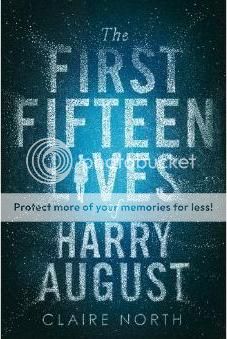
1143. The First Fifteen Lives of Harry August

The First Fifteen Lives of Harry August photo The_First_Fifteen_Lives_of_Harry_August.jpg

The First Fifteen Lives of Harry August is a Time Travel story. It is also a story about re-incarnation (or at least a form of it). It also a story about living one's life over and over again. But, unlike what the publisher will have you think, this is not the first book to do so. Claire North is a pseudonym for a very well know British Author... and apparently, no clues have surfaced, as of yet, of who this author is.

First, a little jaunt down memory lane about what has gone on, in this type of genre fiction. The following titles are very similar to this one, despite the publisher's claims:

  1. Time and Again by Jack Finney
  2. From Time to Time by Jack Finney
  3. Somewhere in Time by Richard Matheson
  4. The Time Traveler's Wife by Audrey Niffenegger
  5. Life after Life by Kate Atkinson
  6. and the classic, and still the best book in the genre: 
  7. Replay by Ken Grimwood
There are other similar books, I am sure, but for now, these are the ones that come to mind easily.

I want to be upfront and mention, that I have not read Kate Atkinson's book, although it has come to my attention recently. It is on my TBR.  I also, never read Jack Finney's follow up to "Time and Again". From the simple synopsis of the books, thematically, the books that are the most similar with "The First Fifteen Lives of Harry August" are "Life after Life" and "Replay". For me, as a reader, "Replay" is a masterpiece in the specific subject matter and the context in which it addresses it. It gives you a sort of wistfulness, a sort of remembrance of years gone by, dredging up an opportunity to think about all those times you could have went "right" went you went "left" in your life and vice-verse.

But, this is NOT a review of that book, "Replay". This is a review of a brand new book.  And it turns out, despite my apprehension that thematically the two books were going to cross into similar territory, the two books are actually very dissimilar. The First Fifteen Lives of Harry August turns out to be an exceptional book and stands out on its own, as a very successful science-fiction book. Although it bills itself as a Time Travel story it turns out to be more of a parallel universe story, or more precisely, it resides in that special area where string theory says higher dimensions allow for the existence of multiple Universes and our Universe is born and dies again, over and over, and so is everyone in it. Including some very special people. These people are called Ouroborans  or Kalachakra. Who get to live through every iteration of the Universe.

Harry August is born in 1919. And he is a Kalachakra. Not until he dies and is born again in the same circumstances does he realize his predicament. He has lived this life before, and he remembers everything that he did, so, is there something he can do to improve his predicament? But, this is only the second life. After you've relived a few more times, you realize there are other things you can do to improve your lot, and maybe even the life of those around you. Your immediate family? How about your wife? And as it turns out, Harry is not the only Kalachakra. Ouroborans have been born throughout the ages, and they have created what is called the "Cronus Club" (Cronus = Time), with charters in most major cities of all the major continents. Knowledge is passed on from generation to generation and century to century.

There is only one major rule for Ouroborans. Do not mess with history. Allow the Arrow of Time to flow as it always does without interference and foreknowledge of events to come passing to normal humans. (In other words, you can't kill Hitler, for example). That is why it is important for Harry and the other Ouroborans to hide their identities, remain secretive, protect their kind and punish those of their kind who try to change history. But how do you change time, if your time span within one Universe is finite? As a Ouroboran, you have the ability to live multiple lifetimes across multiple Universes as you are reborn again and again.

This then, sets-up thematically, the main conflict of the story. Harry and his arch-enemy and sometimes friend Vincent Rankis. Vincent is also an Ouroboran that Harry meets in one of his early lives when he becomes a professor of Physics. But Vincent has some big plans. And these plans not only affect all Ouroborans, they affect the entire Universe, they effect reality, they effect the entire Universe. Harry is determined to stop him from the first page... There is also something else special about Harry and Vincent which most Kalachakra do not possess. Will this ability serve him or hinder him as it does one of his Kalachakra lovers?

This is simply an extraordinary novel. A powerful, fantastic novel. I went into it with a lot of trepidation and hesitation, because of so many previous examples in the genre. And maybe, that is the reason why the author decided to remain anonymous and use a pseudonym. I do not know. However, judging by the success of this book, I bet, the name Claire North will become known very soon. I sure hope so. Because, I'd like to see more works by this author. Not necessary in the same milieu. That almost never works.  Case in point, Jack Finney's From Time to Time. It's just that I kept expecting another great novel from Ken Grimwood, but then, the author disappeared. Leaving us with a masterpiece, yes. But just the one.

A very easy five star book. Highly recommended. Go, buy it. NOW. READ IT. You will not regret it.


Saturday, May 17, 2008

1012. Then We Came to The End

then we came to the end
"Then We Came To The End" is Joshua Ferris' first novel. In many ways it is a magnificent novel. In many ways, he captures the feeling of working in today's office. OR maybe, I should caution readers and say, in working in the office of "near yesterday". Because the office of today is becoming another beast. In the book, Joshua Ferris, very capably describes the ups and downs of office and cubicle life, the meetings, the coffee breaks, the gossip, the lay-offs, the angst, the inter-office romance, the unrequited love for coworkers, the dreams of coworkers, those who make it and those who don't.

A lot of people have described this first novel by Joshua Ferris as a comedy. Personally, I don't agree with this description. I am more keen to compare this novel to a Greek Tragedy:
"a form of drama defined by Aristotle characterized by seriousness and dignity and involving a great person who experiences a reversal of fortune." Additionally, "Aristotle's definition can include a change of fortune from bad to good as in the Eumenides, but he says that the change from good to bad as in Oedipus Rex is preferable because this effects pity and fear within the spectators.) According to Aristotle, "the structure of the best tragedy should be not simple but complex and one that represents incidents arousing fear and pity--for that is peculiar to this form of art."
In more simpler terms, the characters in this novel, undergo a change in fortune, not necessarily because of their mistakes, but maybe amplified by their mistakes. Each and every character also has a unique way of dealing with his or her situation and with the consequences of their actions. If they make mistakes in response to a layoff, what is the action that they take to deal with it? If the mistake was with the partner in the firm in which they are employed, how does that affect their livelihoods, and how do they deal with that?

Certainly, seeing people in the daily routine of getting coffee after getting to the office and then proceeding to waste the next two hours on minutia is funny -- heck, I recognize myself there, because I am guilty of that. I have done that, a lot of times in times of high stress. Seeing people afraid of a diminutive woman (less than 5'2") who is their boss can also be funny -- what can cause people to fear someone so much? And of course, the extraordinary response of one individual to being let go, who continues to go into the office, bypassing security, day after day, to work on a project with constantly changing guidelines and goals, is seriously funny. But we can all relate with that I think. If you've ever been laid-off, and maybe thought it was unfair, who among you hasn't thought, if I could only prove my worth to them, make them see what I can do on this project, maybe they would change their minds.

But it's not as simple as that. And neither is this book, this novel. In the end, this novel is a book within a book. I am not sure from where, but I get the feeling, that Joshua Ferris is writing about Lynn, the senior partner, the intimidating figure in this novel who lays people off, but who in the end is scared by "breast cancer". There is a section between Part 1 and Part 2 of the book called 'The Thing to Do and the Place to Be'. It's the one section of the book that deals with only one person, one character in the whole book. It's about Lynn. That is why I suspect, the book, might have originally been intended to be written about Lynn and then evolved into much more than that. But even if that's not the case, this section, elevates this book to a very high level. It is such a wonderful piece of writing, it gives you such depth and understanding into a fictional character that you begin to understand her, you begin to feel how she feels, and how many others in her position might feel.

That is high praise indeed. Hank Neary, another character in the book, writes about Lynn in his fictional novel. (He's one of Lynn's employees who is always working on his novel, and finally, like the actual book's author, gets published). Later he reads to a crowd some of his words, as the novel comes full circle. And the story, like life, comes full circle. At this point, I will not reveal any more of the plot, and I have only given some vague hints about the office politics, the office threats, the office romances, the rocky relationships, and all the other things that make living life so extra-ordinary. I wonder if this novel in a way is also a tribute to our post-9/11 bout with soul-searching and the fear of mortality. Because in a sense, the characters fear everything that happens to them, yet revel in the magnificence of living, the essence of being. That is what makes life bearable. That we're not on this journey alone, but there are others on it. And sure, some of them have their quirks, and we talk about them, and gossip about them, and yet we also drink coffee with them, and occasionally we go out and have some drinks with them.

In the end, I found this novel extremely satisfying as it recognizes all the things it means to be human. And that is high praise indeed. This is my first 5 star review of the year!!! (In the past, I used to give such highly praised books one big star).


I highly recommend it.